 Let us talk a bit about the preparations that shall be done by the crew of the supply vessel about to enter the 5000 meter zone of the offshore installation. Before leaving port, the vessel shall ensure that it has most recent field charts and up-to-date information about the installations it is going to. On the way to the field, the vessel must monitor the weather and the weather forecasts. The people on the installation will be doing the same but the final decision for going ahead with any operation will be made by the Master.
Whenever at an hour of way or consistent with field procedures, the vessel notifies the installation of the vessel’s ETA, or estimated time of arrival. After the vessel is instructed to proceed, the pre-entry 500 meter zone checklist must be gone through.
Every vessel will have one as a part of the safety management system. Sometimes the charterers will have one that they will need the vessel to use. Whether the company or charterer checklist, it will include a communication check and a full equipment check including engines, thrusters, and rudders.
All propulsion machinery should be started; steering gear system and changes between control positions and maneuvering modes need to be checked. Some fields require the vessel to be on DP, while others insist that it is not used. The vessel needs to get it right. If required, the DP checklist must be completed and the DP must be running on entry to the zone.
Once all checklists are completed, the vessel can request permission to enter the 500 meter zone. Only when permission is given, can the vessel proceed. Before entering the zone, there must be a toolbox talk. Although time may be limited, it is important that the deck crew members understand the planned operations as well as the hazards on the vessel; there are many external hazards that must be considered.
The most recent field charts will be needed. Check with the OIM or the designated person to ensur e that you have the most recent information. If subsea operations are taking place, it is unlikely that the vessel be allowed inside the 500 meter zone. But this can happen if the installation needs the supplies urgently. e that you have the most recent information. If subsea operations are taking place, it is unlikely that the vessel be allowed inside the 500 meter zone. But this can happen if the installation needs the supplies urgently.
Helicopter operations are another potential hazard. Helicopters almost always land and take off into the wind and the vessel is usually asked to stand off. The vessel will be informed of any helicopter operations.
Other operations that can conflict with the vessel’s activities include overboard discharges, flaring, well testing, seismic work and air venting. The Master must ensure that the installation’s designated person keeps the vessel fully informed about all these operations, both planned and unplanned.
The vessel should first maneuver to a safe position outside the radius of the installation’s cranes and at least fifty meters off the installation. The Master should then assess the situation to ensure that working conditions are safe before proceeding to the position for cargo operations. Inside the zone, the engine room as well as the bridge should be continually manned. It is best practice to work down weather from the installation. If the installation requires vessel to work up weather, a further risk assessment may be needed.
It is possible that the vessel may need to tie up to the installation. This is a challenging procedure. The vessel will be moored either stern-to or alongside. Regular checking of the mooring lines is essential. These situations can cause considerable wear on the mooring ropes.
The personnel on the bridge must maintain a constant listening watch on the field VHF channel. The vessel must be ready to change position or stop operations at short notice. Stopping operations may mean leaving the 500 meter zone. Working inside the  500 meter zone is demanding for everyone on board. 500 meter zone is demanding for everyone on board.
Many operations may be going on at the same time so it is important that anyone is told about any changes to the plan. The deck crew needs to keep alert – they must be prepared to stop or alter what they are doing at short notice, either because the weather has deteriorated or because the installation requires it for any reason.
Proper planning, good communications, and putting the safety of everyone on board as main priority will help to make these operations safe and successful.
 An engine room fire broke out on a tug involved in the towing of an offshore rig and the engine room was believed to be unmanned. The carbon dioxide system panel was opened, the alarm sounded and the engine room ventilation shut down. It took some time to confirm that the engineering specialist on board was not in the engine room. After this delay, it was decided to use the carbon dioxide system. In the stress of the situation, the officer who ordered to operate it forgot the instructions. He believed he was looking at the operating system with the backup. He only operated the first lever. Hours later, he realized he had not operated the system correctly. He decided to check the carbon dioxide room – it was obvious that no carbon dioxide actually reached the engine room. By then, the fire has burned itself out, completely destroying the engine room.
It is vital for the officers to be familiar with the carbon dioxide installations on board their ship; during a major emergency is a wrong time to work out how to use the system. Officers will be faced with demanding decisions. They must educate themselves about the system before they have to use it. If the engine room is on fire and unmanned, the carbon dioxide should be used as soon as possible. There is no benefit in delay. Fire team should only enter the burning engine room if there are personnel inside. Delaying using the system only increases the damage to the engine room or cargo space and increases the risk to the ship and personnel on board.
Carbon dioxide makes up a tiny proportion of the atmosphere, less than 0.1%. At higher concentrations it is not just asphyxiating – it is toxic. It affects the central nervous system – this begins at the concentration of 2% which after an hour or two causes headaches and difficult breathing. A concentration of 5% causes headaches, difficult breathing and sweating. The 10% concentration quickly cases unconsciousness, increased heart rate, headache and sweating. Concentrations exceeding 17% result in loss of control, unconsciousness, convulsions, coma and death. asphyxiating – it is toxic. It affects the central nervous system – this begins at the concentration of 2% which after an hour or two causes headaches and difficult breathing. A concentration of 5% causes headaches, difficult breathing and sweating. The 10% concentration quickly cases unconsciousness, increased heart rate, headache and sweating. Concentrations exceeding 17% result in loss of control, unconsciousness, convulsions, coma and death.
In dealing with carbon dioxide systems remember that the hazard is much greater that asphyxiation by an inert gas. Although all systems will be different, they will have similar components. These will include a number of gas bottles, a manifold linking them all, and the release system involving main release valve. The release system will always be operated by small gas bottles as these systems are designed to operate without electrical power. There are always two operating systems – one in the carbon dioxide room and remote one outside it but not in the engine room. Two officers should be involved in the releasing of carbon dioxide...
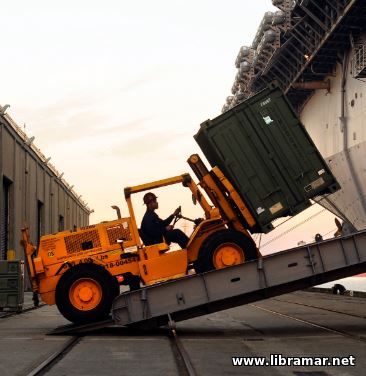 As we know, the forklift trucks are among the most useful and practical devices used on board ships. However, they shall be used with utmost care since they can be really dangerous to the people. The first thing is to assess the risk – a standard operating procedure for the use of forklift will have been produced as a result of the general risk assessment. This procedure should identify the hazards associated with operating the equipment on board particular vessel. It will also contain the control measures, such as the use of the correct personal protection equipment.
Only the qualified drivers shall be allowed to drive the truck. They shall have completed the appropriate training course conducted by the authorized organization. The certification they achieve shall be kept on boast as part of their personal records. Never use a forklift truck if you are not qualified to operate. And, prevent anyone from operating a forklift truck, who is not qualified or authorized to use it. Under no circumstances should you operate the forklift truck if you are taking prescribe medication affecting your ability to drive.
Likewise, anyone found driving under the influence of alcohol or illegal substances, is liable for immediate company dismissal and possibly criminal prosecution from port state authorities. In some instances, the work permit may be issued. This is good practice as it creates the record of the forklift truck use and the people who are authorized to drive it. The ignition key is then handed over. Note that they must be removed from the ignition each the forklift truck is left unattended or stowed.
A number of checks shall be made before the forklift truck is used. Firstly, we shall ensure the good working condition of the device. Ideally, there should be a condition checklist supplied based on the manufacturers guidelines, and the technical inspection should take a minimum of 5-10 minutes; that five or ten minutes of your time well worth taking – it will ensure the safety of yourself and your colleagues. These checks shall be made in the following order. Firstly, is the parking brake on? Next, the cage should be checked; where the open top cages are fitted, the hard hats must be worn as necessary.
It is recommended to always wear a hard had with the chin strap in place when operating the any forklift truck. The safety belt, if fitted, should be tested and inspected for wear – this must be worn at all times whilst driving the vehicle. Check the hydraulic connections for any leaks and wear-and-tear. The load guard, carriage plate, and forks should be inspected for signs of cracks or deficiencies. Oil and fuel levels must be checked. The oil level is correctly established by taking a dip stick reading. Coolant levels are checked and any relevant hoses inspected. There should also be sufficient fuel in the tank for the day’s operations. Wheels and tires are examined. Only now and upon completion of all checks, should the engine be started. If the engine fails to start, under no circumstances should the attempt be made to jump start the vehicle.
Once started, the foot brake can be tested. The steering should be checked for excessive play or wear. See and be  seen – vehicle lights and hazard lights must work efficiently and any mirrors positioned correctly by the driver. Be heard – check the horn and any reversing alarms. The hydraulic controls also need to function correctly. Finally, the tilt mechanism is tested. If any deficiencies are found, report must be made to the officer-in-charge and the key is returned, and “Do not use” sign must be displayed clearly so that the other crew members are aware of its condition. Remember, no matter how often it is used, each time the forklift truck is signed over, it must be checked prior to use. seen – vehicle lights and hazard lights must work efficiently and any mirrors positioned correctly by the driver. Be heard – check the horn and any reversing alarms. The hydraulic controls also need to function correctly. Finally, the tilt mechanism is tested. If any deficiencies are found, report must be made to the officer-in-charge and the key is returned, and “Do not use” sign must be displayed clearly so that the other crew members are aware of its condition. Remember, no matter how often it is used, each time the forklift truck is signed over, it must be checked prior to use.
It must be established that the forklift truck is capable of lifting the load safely. At no time should you lift the load greater that than the vehicle’s specified Safe Working Load, which must be clearly marked. Care should be applied to the establishing the weight of the items to be lifted or moved. Large items, such as machinery or equipment, should also have their own weight indicated. Stores shall have their weight clearly described on the packaging or the delivery note. Never attempt combined lift with another vehicle. Complicated lifts involving a pair of forklifts requires special training and should not be carried out by ship’s personnel. Stores and supplies are usually delivered to the ship on pallets and these are ideally for maneuvering the loads around easily.
Whenever possible, put items on the pallets and secure them. The condition of the pallet must be checked for damage or defects before use. Items should be placed centrally on the pallet to maintain even balance. Larger pieces of equipment which are not suitable for palletizing, can be moved safely so long as they are secured and within the SWL of the equipment. Waste containers and the garbage bins are often moved by forklift trucks. Some of them are designed for this purpose; others are not and should be carried on a pallet. In some instances, forklift truck will be as the raised work platform – never use a pallet for this operation, only use specially designed, certified and approved  man carrying cages. man carrying cages.
All working aloft procedures must also have an appropriate risk assessments carried out and permits issued prior to use. A forklift truck is not a taxi – under no circumstances should the cage be used to transport crew members. Particular attention must be given to how the forks interact with loads. Pallet sizes vary. The distance between the slots must correspond correctly with the forks. If not, the forks will need to be adjusted. Fork plates must be leveled and spaced equally apart, equidistant from the center to avoid a potentially dangerous unbalanced load. The load must also be checked for fork blade length. If the load exceeds the length of the forks, it could topple forward. If the load is significantly shorter that the fork length, the protruding blades must be taken into account, particularly if there are other pallets nearby. Remember – only lift items that can be moved or carried safely within the working limits.
It is vital that the fellow crew members, stevedores, visitors or anyone else in vicinity are aware of the forklift operations taking place. Extreme care should also be taken of passenger on vehicle ferries. Pedestrian walkways, emergency exits must remain clear. Ro-Ro loading and discharge involve a constant stream of traffic arriving and leaving the ship. Caution must be observed to avoid collision with the vehicles. Extra care must be taken if the load has to be reversed. If the load is large and obscures the vision of the driver, second crew member may be required to act as a signaler and to control the traffic flow, if necessary. Access to either the pickup point or drop off point should be checked for obstructions.
 Rig Manager – Toolpusher
The toolpusher’s job has been redefined to include a broader range of responsibilities than formerly; hence the modern title, rig manager. The rig manager reports directly to the drilling superintendent. No longer is the main responsibility simple to get the hole drilled efficiently and quickly. The job has expanded to include direct control over safety, environmental, and other regulatory concerns in the field. The landowner’s concerns over access and water must be addressed. Supply firms must be contacted and supervised. Visitors must be controlled and made aware of safety procedures.
The rig manager makes sure each driller keeps all operations within the rig’s capability and that each driller trains the crew to work safely. Through experience, the hazards on the rig are known and eliminated promptly. If a job safety analysis program is in place, the rig manager has the primary role in its implementation. Periodic inspections are done with each driller’s participation and input. A rig safety list is filled out and the inspection results are reported to the superintendent. The manager investigates every accident, analyzes it with the driller and crew, and oversees needed corrective measures.
Driller
The driller reports directly to the rig manager. The driller is in charge of the rig and crew on the location. From the driller’s console area he or she controls the drawworks and brakes, sets the bit weight, rotary speed, and pump pressure. Experience is important because errors in judgment can lead to damage to the rig or injury to the crew. The rig crew must trust the driller completely because safety depends a great deal on a driller’s skill. A driller must be constantly aware of safety, not only of behavior and actions, but also of each person on the rig. The driller knows the value of teamwork and sees that the crew operates as a well-trained team; knows the ability of each individual; and won’t assign a green hand a job beyond his or her experience.
The driller and the rig manager decide when to pull and change the bit. During active times on the drill floor, such as during a trip or a connection, the driller runs the rig at a pace suited to the crew, knowing that pushing them beyond their ability is dangerous. The driller makes certain that the new crewman knows the job, as well as the safety procedures involved in doing it.
The driller sees that the rig is well-maintained, and trains the crew to be on constant alert for worn or faulty equipment. Once spotted, immediate steps are taken to correct the problem. Drillers make certain all guards, signs, and protective devices are in place and in good condition. A driller must enforce the use of personal safety harnesses by anyone climbing or working overhead. Horseplay is not allowed on the rig. Should a crewman show signs of being under the influence of alcohol or drugs, the driller will relieve him of duty immediately and report the occurrence to the rig manager. The driller keeps all important paperwork current, such as bit performance records, daily reports, and time sheets.
Crew Members
The crew usually consists of a derrickman, two or three floormen and, depending on the rig, a motorman and/or electrician. Each must know the job and function as a team in order to work efficiently and safely.
Each crewman must report to work on time alcohol and drug free. The job demands everyone to be fully alert. Many contractors conduct random drug testing with mandatory testing of the whole crew following an accident. Crewmen must wear personal protective equipment, including proper clothing. Excessive hair length can be hazardous. In some situations beards are forbidden.
On the rig, each crewman must always be safety-conscious. The careful worker learns to be observant, foreseeing danger before harm is done. Some jobs will be repetitive, which can lead to carelessness; that is when the danger increases.
 Every crew member should be aware of being struck by or caught between objects, especially around the pipe racks, mud pumps and tanks, and on the rig floor. A rig worker should not engage in unsafe practices. Tools must not be lying around the floor, ladders, or walkways because they present a trip or fall hazard. Crew members should always use the ladders and stairs, and avoid jumping off anything over three feet high. Sliding down rails or riding the catline or elevators must not be done. Very importantly, everyone helps the new crew member by instructing him or her on the correct way to do the job safely and by pointing out the hazards around the rig. A competent crew avoids horseplay and practical jokes that might have serious consequences. Every crew member should be aware of being struck by or caught between objects, especially around the pipe racks, mud pumps and tanks, and on the rig floor. A rig worker should not engage in unsafe practices. Tools must not be lying around the floor, ladders, or walkways because they present a trip or fall hazard. Crew members should always use the ladders and stairs, and avoid jumping off anything over three feet high. Sliding down rails or riding the catline or elevators must not be done. Very importantly, everyone helps the new crew member by instructing him or her on the correct way to do the job safely and by pointing out the hazards around the rig. A competent crew avoids horseplay and practical jokes that might have serious consequences.
 Less than five percent of rig accidents are caused by mechanical failure. People make safe operations. It is extremely important for everyone to develop a sense for safety and to practice self-improvement. Before acting, an individual must automatically consider ”will this put anyone in danger?”. Every crew member must be ever alert to risky or unsafe situations. Being alert is the best way to avoid injury to yourself and the crew. It is critical that a new crew member receives supervision and instruction in safe operating procedures immediately upon reporting for work. Industry data show that sixty percent, or more, of rig injuries involve people on the job less than six months. Even the experienced person may need supervision, especially if coming from a different type or size or rig.
Operator
Responsibility for the rig safety follows the corporate chain of command. All are involved; from the operator down to the new floorman.
Depending on the contract, an operator may specify the casing and mud programs to be followed, finish the casing, have it delivered, inspected, and specify the setting depth. If operators furnish the mud, they will control the type and weight and be responsible for having ample supplies on location, or nearby, to control the formation pressures encountered. Such matters are usually covered in the drilling contract. An operator must select a contractor with a rig capable of safely handling the job. The superintendent, field foreman, or consulting drilling engineer may be on location at crucial times and be in direct control of operations. At such times the operator is effectively in charge of seeing that the work is performed without endangering the crew, equipment, or well.
Drilling Contractor or Rig Owner
A contractor has the primary responsibility for safe drilling operations. The rig owner determines the safety policy and instructs  the various supervisors to implement that policy, showing a genuine interest and actively participating in developing all aspects of the company’s safety programs. The rig’s safety record should be as important as performance. A good contractor will never allow cost-cutting measures to compromise crew safety. The contractor has a responsibility to the rig crew and to the client to provide safe drilling equipment. All equipment should be properly sized to safely handle expected load limits, pressures, and depth. All needed safeguards should be in place and meet, or exceed, applicable regulatory standards. the various supervisors to implement that policy, showing a genuine interest and actively participating in developing all aspects of the company’s safety programs. The rig’s safety record should be as important as performance. A good contractor will never allow cost-cutting measures to compromise crew safety. The contractor has a responsibility to the rig crew and to the client to provide safe drilling equipment. All equipment should be properly sized to safely handle expected load limits, pressures, and depth. All needed safeguards should be in place and meet, or exceed, applicable regulatory standards.
The contractor should be aware of, and in compliance with, all governmental regulations pertaining to drilling operations including permit requirements for certain jobs performed by the crew. Responsibility for safety training is given to the drilling superintendent, rig managers, and drillers. They in turn ensure that all personnel under their supervision participate in safety training and education. To underscore their interest in safe operations, some contactors provide safety bonuses, shared by crew and supervisors, after completion of a well.
Most multi-rig contractors have a safety engineer or director charged with the responsibility of overall safety matters. Usually safety personnel report directly to the company president or owner. Should an accident occur, they conduct a thorough investigation, prepare all reports and develop procedures to avoid a reoccurrence of the incident. At the direction of the owner, the safety director may implement a job safety analysis (JSA) program enlisting support and input from all personnel in order to achieve a safe work site.
Drilling Superintendent
Drilling superintendents, or managers, are in top management positions and usually report directly to the owner or company president. A superintendent may be in charge of the overall operations of several rigs, including the performance of the rig managers, drillers, crewmen, subcontractors, service company vendors, and other field personnel. The superintendent is in contact with the operator’s management both before and during drilling, and learns the capabilities of all the rigs and crews under supervision. Other aspects of the job may be to draw up the drilling contact or assure the client that the assigned crew can do the job safely and efficiently.
 The superintendent works with the rig managers to see that the equipment and location are rigged up safely. Usual conditions at the locations are dealt with properly. Rig managers are informed on any changes in safety procedures or equipment on the rig and are required to conduct safety training for the crew. Training will include periodic rig inspections meant to spot potentially hazardous conditions and insure that such conditions are eliminated. Rig managers also deal with service companies, consultants, equipment engineers, and others working to improve rig performance and safety. The superintendent works with the rig managers to see that the equipment and location are rigged up safely. Usual conditions at the locations are dealt with properly. Rig managers are informed on any changes in safety procedures or equipment on the rig and are required to conduct safety training for the crew. Training will include periodic rig inspections meant to spot potentially hazardous conditions and insure that such conditions are eliminated. Rig managers also deal with service companies, consultants, equipment engineers, and others working to improve rig performance and safety.
Continued
 No matter how well designed the rig or how well supervised the crew, only careful, conscientious conduct by everyone can assure safe operations. Each person should receive instructions on the proper way to perform their work and the use of personal protection equipment (PPE). Safety standards prohibit the wearing of rings or other jewelry, loose clothing, or long hair on a drilling rig. All these things are subject to being caught in moving machinery.
The mandatory personal protection items worn by each crewman should include hard hat, safety boots, gloves, and safety glasses. Proper clothing is also important.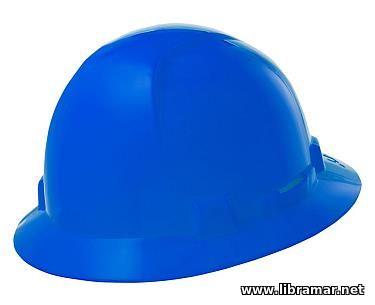
Hard Hat
Safety hard hats must be worn by all personnel, including visitors, when in the work area. Hats must be of nonmetallic, nonconductive material. They must meet prescribed standards of strength and protection from impact, flying objects, or electrical shock. A bright colour increases visibility.
Safety Shoots and Boots
Steel-towed footwear made of heavy leather or neoprene construction is mandatory on drilling rigs. They greatly decrease the number and severity of toe injuries. Soles  and heels should be of nonskid material (rubber is too slippery). They should be discarded when the metal begins to show. and heels should be of nonskid material (rubber is too slippery). They should be discarded when the metal begins to show.
Gloves
Gloves protect the hands from minor injuries and improve the hold on slick or wet surfaces. They should be of heavy cotton construction, short and close fitting. Large gauntlets are apt to get caught in something so gloves of this type should not be worn. Rubber gloves are needed when handling caustic or corrosive material.
Safety Glasses, Goggles, Face Shields
Eye protection is of utmost importance. If an eye injury occurs, prompt medical attention is critical. Personnel should always wear approved safety glasses, goggles, or face shields when engaged in the activity where flying material is generated. These should be readily available on every rig. The risks to eyes are numerous, whether engaged in routine maintenance chores or a major activity like pulling the drill string. Any action involving a hammer can produce flying chips. Wire brushes, grinding wheels, scraping, compressed air or steam cleaning operations all present dangers to vision.
Approved splash-proof goggles or face shields should be worn when handling hazardous materials, such as caustic, cement, cleaning solutions, molten metal, or chemicals of any kind. cleaning solutions, molten metal, or chemicals of any kind.
Electric arc welding operations should be shielded to prevent damage to the eyes of observers. The welder should always have a helmet on and helpers should be furnished special goggles.
Contact lenses are discouraged because they can hinder attention to the eye if immediate action is required.
Clothing
Only close-sitting, clean clothing should be worn. Long-sleeve shirts, with shirttails tucked in, are recommended. Cuffless trousers help prevent tripping. Each crewman should have available a fresh change of clothing should their work clothes become oily or soaked with chemicals. Aprons should be worn when handling chemicals.
In cold weather, dress as lightly as possible considering the weather and activity level. It is better to be a little cold than too warm. Overheating can cause sweating, dehydration, and chilling when activity stops. Keep clothing as dry as possible and wear the clothing in layers. Sweaty or wet socks can lead to frostbite or trench foot; change them often.
Specialized Equipment
Hearing protection gear should be worn around any high noise area, such as around the rig engines.
Respirators are required for spray painting, mud fixing, or working in heavy dust. Special breathing equipment and instruction are  needed if hydrogen sulfide is, or may be, present. needed if hydrogen sulfide is, or may be, present.
Falls cause a significant number of injuries; therefore, a full-body safety harness is required for anyone working or climbing aloft six feet or more above the derrick floor.
 The captain of the crew boat is in command of the boat together with all passengers on board, and cargo. It is absolutely imperative to follow all instructions! A boat captain has the right to refuse passage to anyone thought to be under the influence of alcohol or drugs, or anyone who appears to be an unsafe passenger for any reason.
Smoking is not allowed in or around the crew boat. Do not smoke! Note that failure to comply with this rule will inevitably have serious consequences. Passengers must ride inside the boat and not on the deck unless there is an emergency or they are specifically authorized to be there.
The disembarking process is potentially hazardous particularly in high winds or rough seas. Wait for the captain to give clearance to exit. Inspect your lifejacket prior to wearing and make sure that it is securely fastened before coming on deck.
Transfer to the platform will be by several ways. In this articles we will touch two classic ways, namely transfer by personnel basket or by swing rope. The modern means of transfer such as the “frog” and Ampelmann transfer will be dealt with in one of the future articles.
In case of a swing rope the transfer should be at the peak of the vessel’s rise. Face the point where the boat is bumping the platform. Use both hands to hold the rope above a knot. Do not hold the rope between the legs. Do not allow feet or legs to be caught between the boat and the platform. Release the rope for the next person and stand clear. Luggage should be transferred separately in the material basket.
In the transfer is by a personnel basket the transfer, stand in the area designated by the captain. Allow enough room for the basket to swing about. When the basket is lowered from the platform, onto the deck, place luggage and other material in the bottom center of the basket. Step onto the outside rim and hold the basket ropes securely. Keep the knees slightly bent in anticipation of sudden, unexpected moves, particularly in rough seas.
After coming onboard, report immediately to the person in charge of the facility and sign in. you will be assigned a bunk and locker, and a duty station. Information about the rig will be provided: emergency signals, communications, first-aid equipment, reporting injuries, escape routes, smoking regulations, wearing work vests or life jackets, overwater transfers, and fire systems. Procedures for reporting any fuel leakage or escaping oil and gas will be explained.
Specific duties in the event of an emergency, fire, or abandonment will be explained. These emergency procedures are normally posted on station bills that will be located throughout the facility. Please take your time and read them carefully to make sure you are duly prepared to perform them if necessary – the proper knowledge and understanding of these instructions may play a vital role in case of an emergency.
Pollution prevention is another aspect considered especially important offshore. Never throw anything overboard. All rules designed to protect the environment should be strictly observed regardless of the geographical region where the offshore transportation is undertaken. Familiarize yourself with the content of the relevant posters.
Of course, the transportation rules and regulations will differ from one country to another, considering the rules and restrictions imposed by the local authorities as well as company policies and many other factors; however, the instructions provided in this short article will apply in most of the cases and, when followed, will significantly contribute to the safety of your voyage. Have a safe trip!
 We recommend that you go through the content of this short article carefully as this information can be important when traveling to the offshore installation and back. It covers the very basic principles of safe transfer. Of course, the procedures vary from country to country and also different companies can have their policies in place so you must always adhere to them.
On an offshore rig, safe operating procedures and equipment are similar to those on land. Added safety considerations apply, however, involving transportation by helicopter, working over water, and drills of training for various emergency situations. Statistically, offshore drilling has a better safety record than land.
You must report to the heliport on time. Check in early with the dispatcher to see that each name is on the passenger list. Provide all requested information: name, weight (including baggage), company, and designation. Advise the dispatcher and pilot if any type of authorized hazardous material is being transported. Do not loiter around the dock or heliport area. Remain in the designated passenger area until the pilot or captain has given clearance to board. Never attempt to take alcohol, drugs, firearms, explosives, or flammables onto an offshore installation.
The pilot is in total command of the helicopter, passengers, and cargo. Follow instructions! A pilot can refuse passage to anyone thought to be unde r the influence of alcohol or drugs, or anyone who appears to be an unsafe passenger for any reason. r the influence of alcohol or drugs, or anyone who appears to be an unsafe passenger for any reason.
Hold lightweight articles like hats, jackets, or raincoats firmly to prevent their being sucked into the rotors. Carry long articles parallel to the deck, keeping them clear of the rotor blades.
Approach and depart aircraft from the front. Walk briskly but do not run. Avoid the area of the tail rotor and boom at all times. Approach or depart the helicopter in a crouched position, keeping will below the rotor tips. Be especially wary in high winds when the rotor blades may dip below six feet.
Do not store luggage until the pilot gives you instructions. This is important as wrongly stowed luggage can become an obstacle when leaving the helicopter in emergency.
When boarding or departing, step carefully on the proper footholds to avoid damage to the craft’s floats. Do not jump!
 The pilot is concerned with load distribution; store baggage according to instructions and take the assigned seat. Fasten the seat belt and keep it fastened until told it is safe to remove it. The pilot is concerned with load distribution; store baggage according to instructions and take the assigned seat. Fasten the seat belt and keep it fastened until told it is safe to remove it.
Inflatable life jackets should be worn during all over-water flights. Return the jacket to the storage area before departing the aircraft.
Before takeoff, each person should note the closest emergency exits, inflatable life rafts, fire extinguishers, or other emergency equipment. Advise the pilot of any problems with the equipment at once. Pay attention to the pilot’s preflight emergency briefing and follow instructions should an emergency occur.
Smoking is not allowed in or around the aircraft at any time.
Never throw anything from the helicopter. This could result in damage to the rotors and is absolutely forbidden at all times.
If hearing devices are provided, wear them as needed or instructed, to prevent any harm to the ears.
In an emergency situation remain in the seat with seatbelt fastened. Do not attempt to jump from the craft; await the pilot’s instructions. Do not inflate a life jacket or the inflatable life raft inside the cabin. Such action would hinder, or possibly prevent, a speedy, safe evacuation.
In this article we have covered the safety precautions to be taken when you travel offshore by the helicopter. However, and quite frequently, the transportation is done by means of the crew boat. Our next article will concentrate on what you shall do when traveling by boat.
|