Naval History

15.07.2017
BETWEEN FRANCE AND NEW FRANCE — LIFE ABOARD THE TALL SAILING SHIPS

An excellent title providing all readers with quite absorbing look at the life on aboard the sailing ships of the past times, namely those plying the North Atlantic area during the French colonial era. Gilles Proux, the author of this brilliant volume, has mainly been focusing on the first half of the XVIII century and the historical period including the Seven Years' War, analyzing four main aspects of the crossing, namely the maritime shipping traffic and the outfitting of the ships, people of these times together with their occupations, the Atlantic course and ship navigation, and life aboard the vessels.

Combined together, they all making a truly fascinating picture of the sea life. When preparing this publication, the author has used the official correspondence between the Canadian authorities and the Minister of marine, plus the valuable historical documents that have been seized on the ships, personal diaries of the seamen and official log-books, in order to get all required details on the shipboard experience.

In addition to that, numerous photographic images have been included in the volume to better illustrate that exciting period in the history of Canada. The content of this perfectly compiled volume will be very highly rated by all people interesting in the subject.
2570 Views 0 Comments Read more
10.07.2017
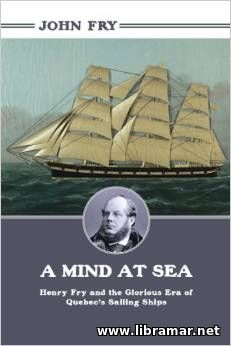
A MIND AT SEA — HENRY FRY AND THE GLORIOUS ERA OF QUEBEC'S SAILING SHIPS

By 1855, Canada ranked among the greatest ship-owning and shipbuilding nations of the world. A vast dispersed flotilla of 7196 Canadian-constructed wooden ships sailed the oceans of both hemispheres. Quebec was the business centre of it all, one of the world's most important maritime trade, and that was where that Henry Fry settled about a century passed after the British forces ended France's failed North American empire.

Two very decisive battles took place on the Plains of Abraham; Quebec city was overwhelmingly French-speaking, and the city would become so again. But for a few years in the middle of the nineteenth century, two of every five residents of the port city used the everyday language of English, and even more did so in business Shipbuilding and owning, and timber commerce — largely conducted by men like Henry through their British contacts — dominated the economic life of Lower Canada, while the city was its capital. At those times, shipping agents and brokers did not care too much about their business ethics.

Many of them were quite well known for continuously charging really usurious fees in advancing money to the shipbuilders. They overloaded unseaworthy ships with timber to enlarge their profits and this was directly endangering the lives of the seafarers. Henry Fry was one of the notable exceptions. Beings very honest and generous, he did his best fighting against human rights abuses, "He was an outstanding figure in the maritime history of Canada", wrote Basil Greenhill....

2304 Viewing 0 Comments Read more
« 1 2 ... 15 16 17