 Obviously, water is the most fundamental resource considered the basis of all life on our planet, and this resource is becoming increasingly important issue and potential source of conflict in today's world. The present fascinating volume setting out numerous ingenious methods used by the ancient human societies to gather, transport and store water, is a very timely book taking into account a profligacy and overextraction threatening the existence of the watercourses and aquifers that for millennia have been supplying people's needs for the water.
The book is intended to provide readers with a general overview of the water technologies established by some of the ancient human civilizations. No publication on water technologies of the ancient times might be considered complete without discussions of the engineering developments of the Greeks and Romans, and these have been covered in the present volume together with the examination of how American societies of that historical period accommodated their water requests.
The text of the book is really wide-ranging and offering some practical and effective technical solutions to the crisis taking place in today's water supply. Readers will find valuable insights made by the author into the ancient water technologies which underpin most of the contemporary practices of water engineering and management.
 Vessels, rather than individuals alone, hold the capacity to alter the course of history. Frequently embodying distinct personalities, ships throughout history have influenced our contemporary lives.
From the formidable fleets of the Persians, Greeks, and Romans to the merchant vessels of the Phoenicians, and from the armadas of Spain and England to solitary ships or small groups of two, three, or four vessels, maritime craft have significantly impacted historical events.
In this intricately detailed book, renowned historian A.A. Hoehling examines these iconic ships: the clippers, the Great Eastern, the USS Monitor, the RMS Lusitania, the ships of Dunkirk, and the USS Arizona.
The author offers vivid portrayals of the ships and their associated figures, vividly recounting the expeditions, battles, triumphs, and setbacks of these extraordinary voyagers. You are encouraged to dedicate some of your time to reading this remarkable book about the most influential ships that truly transformed history, as this is knowledge that everyone should possess.
 Men of the ancient world, throughout their historical timeline, were reluctant to venture far from the sea. It was intricately woven into the fabric of their existence, and among their significant contributions to future generations was their mastery of this exceptionally useful yet perilous means of communication. The ancient mariners of the Mediterranean can be credited with most of the major advancements in shipbuilding and navigation that the western world would recognize until the advent of steam power.
The specifics of this accomplishment—the strategies they developed for rowing war galleys, the rigging they created for merchant vessels, the methods they devised for constructing a hull, and similar topics—constitute a highly technical and specialized field, yet one that is closely linked to the daily lives of ancient people. It is no coincidence that the west's first epic poet chose to narrate the tale of a storm-battered captain, and its first historian and dramatist emphasized a pivotal naval confrontation.
Despite the clear significance of this topic, no scholar adequately addressed it until the very end of the last century. In 1895, Cecil Torr published his work, Ancient Ships, which provided a concise yet commendable overview of the knowledge available at that time regarding the design, construction, and equipment of Greek and Roman vessels.
This publication addressed much of the existing gap, but not all; and although Torr promised further studies on other aspects of shipping, he never completed them. Furthermore, due to the increasing volume of new material that archaeologists were continuously discovering, even his contributions quickly became outdated. Subsequently, after World War II, underwater archaeology emerged and began to explore a source of entirely new evidence...
 This book presents a comprehensive comparative analysis of decorative elements – including figureheads, topside ornamentation, and stern gallery designs – utilized by the ships of the principal maritime nations of Europe during the peak of the sailing era. It encompasses both military vessels and the most esteemed merchant ships, specifically the East Indiamen operated by the prominent chartered companies.
The project originated in 2000 when the author was tasked with conducting research for an ambitious initiative to construct a full-scale replica of a Swedish East Indiaman, resulting in a wealth of information that extended far beyond the immediate needs of accurately adorning the replica. In exploring the artistic influences on European ship decoration, it became evident that this narrative fundamentally revolves around the baroque style, its spread from France, and its gradual evolution into unique national adaptations in Britain, the Netherlands, Denmark, and Sweden.
This subject is inherently visual, and the book enhances its discussions with a plethora of photographs depicting contemporary ship models, paintings, and plans, alongside the author’s own interpretive illustrations of specific details. As the first significant publication on this subject in nearly a century, it will undoubtedly attract the interest of ship modelers and historians alike; however, with comparative examples sourced from architecture and sculpture, it also offers a wider contribution to the history of applied arts.
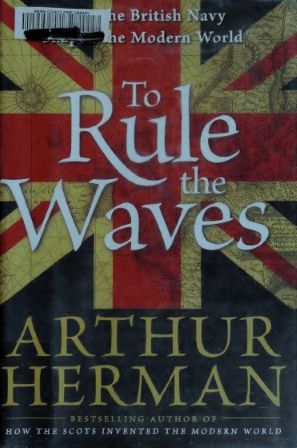 The role of a historian extends beyond merely recounting or explaining the past; it involves demonstrating how present circumstances have been shaped over time. This book explores how a single institution - the British navy - crafted the modern global system, which continues to define our world, for better or worse. It began by challenging and dismantling the global order established by Spain and Portugal in the age of Columbus.
Later, during the 18th and 19th centuries, it reconfigured the world to serve the needs and ambitions of the British Empire. These needs -market access, free trade across borders, a stable international order that favors peace over conflict, and rapid communication and travel across oceans and skies - still underpin modern globalization today. Naturally, such a complex historical process involved many actors and factors beyond just the British navy.
However, removing it from the narrative makes the history of globalization appear more uncertain, more chaotic, and less inevitable. The existence of the British Empire - a foundation for half of today’s independent nations - would have been unimaginable without the navy’s influence. Moreover, without the Empire and its successor, the Commonwealth, the political map of the world would look quite different. While other nations could have forged a unified global structure, they likely would not have achieved it as swiftly, efficiently, gracefully, or humanely. Since the days of the Roman legions, no military force has had as profound an impact on both national and global history as the British navy.
Captain Alfred Thayer Mahan, an American naval officer, famously argued that the history of Western civilization is largely the history of sea power - the ability of nations and empires to control the vast “common” of the oceans and deny that control to others. Through mastery of sea power, even smaller nations could dominate their rivals by controlling access to vital resources and shaping events, trends, and even the course of the globe itself. This demonstrates the core meaning of “ruling the waves.”
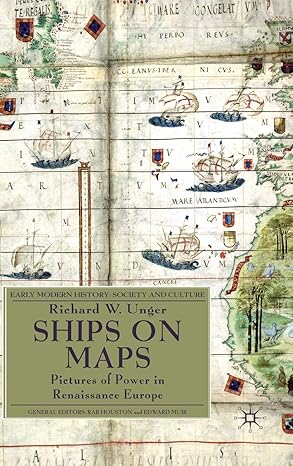 Before 1375, ships rarely appeared on maps. By 1550, they had become prominent features, depicted across oceans, seas, estuaries, rivers, and lakes in various kinds of maps - ranging from the most extensive to the highly detailed. This dramatic shift can be attributed to broad changes in map-making techniques, an explosion of geographical knowledge, and evolving European perspectives about themselves and their place in the world during the Renaissance.
Understanding the subsequent disappearance of ships from maps in the 18th century involves examining similar underlying factors - shifts in artistic fashion, technological advancements, and new ideas about Europe and the physical universe. To truly grasp the reasons behind the rise and fall of decorative vessel illustrations on maps, one must explore the ideas, representation issues, and the social and economic structures that regulated map production. This inquiry is akin to a long voyage through an array of images - starting from simple, small sketches of the landscape around the mapmaker, to some of the most exquisite works of Renaissance art.
Such explanations highlight the cartographic revolution of the 15th and 16th centuries, reflecting changes in perceptions among thinkers, writers, and policymakers. They also reveal how the practical needs for new knowledge and user demands shaped both the art and function of maps. Maps always simplify a complex world.
They serve as external, physical representations of the earth’s surface—multifaceted, yet inherently limited. Since it is impossible to perfectly replicate the land’s reality, maps are essentially portrayals—likenesses and simplified models. The precise duplication of any geographical setting is unattainable; therefore, maps, like all forms of communication, intentionally fragment and streamline reality to convey understandable information.
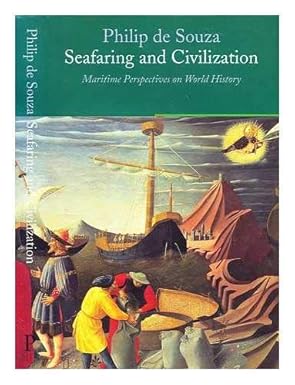 This study examines selected themes in the evolution of human civilizations through a maritime lens. It does not aspire to provide a comprehensive account of world history in chronological or geographical terms. Instead, it aims to highlight the significant role that seafaring has played in human achievements. While the contributions of seafarers and seafaring to the progress of civilization is a fascinating and diverse topic, it is important to acknowledge that there are many aspects of human activity that are not directly related to seafaring.
A central theme of the book is the development of maritime networks that have connected various societies and civilizations. These networks have served as vital channels for the exchange and distribution of goods, the projection of political and economic power, and the spread of ideologies and cultures. Broadly speaking, these networks can be categorized as either economic or political. Economic networks primarily involve trade, allowing states or organizations to extract, distribute, transform, and consume resources such as food, metals, and timber.
Political networks consist of maritime empires or confederacies where dominant groups direct the efforts of others to fulfill their needs. In practice, these two categories often overlap. The most successful seafaring civilizations can be identified as those that have adeptly leveraged both economic and political networks to accomplish their objectives.
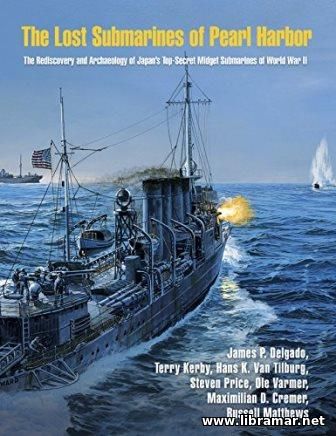 This is a truly brilliant publication and a real treasure for the people interested in the naval history, particularly in the destiny of the submarines belonging to United States fleet participating in the World War two. According to the hundreds of reviews submitted by the thankful readers, the title is a must-have one due to its content, where the author provided the detailed historical background and covered all relevant technical aspects in detail.
In addition to the attacks of the midget underwater boats of the Japanese fleet on Hawaii, the author also deals with the similar operations that took place in the other places, such as the Australia and Madagaskar. The style of presenting the material is excellent, making the reading fascinating, the text is informative and the coverage leaves no grey areas.
In fact, this is one of the best studies of the Japanese program of mini-submarines, with the main emphasis places on those six boats involved in the attack. We would encourage all fans of that war and actually all fans of the underwater vehicles to read this book carefully as it contains wealth of information not provided in any other books of its kind, and presents it in a nice reader-friendly way.
|