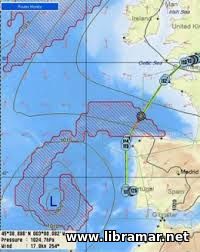
What is voyage planning, who is responsible, how do we comply with the rules and how do we utilize the features and functions available in an ECDIS? The purpose of voyage planning is to support the bridge team and ensure that the ship can be navigated safely between ports from berth to berth. A voyage plan should cover ocean, coastal and pilotage waters and according to STCW regulations be planned in advance. The voyage plan aim to establish the most favorable route while maintaining appropriate margins of safety and safe passing distances offshore.
The following factors are amongst those that should be taken into account:
- - The marine environment
- - The adequacy and reliability of charted hydrographic data along the route
- - The availability and reliability of navigation aids, coastal marks, lights and radar conspicuous targets for position fixing along the route
- - The type of cargo can influence route selection
- - Any routing constraints imposed by the ship, e.g. draught, type of cargo, etc.
- - If possible, avoid areas with dense traffic
- - Take into account weather forecasts, current, tide, wind, swell and visibility conditions
- - If possible, avoid areas with onshore set or areas where onshore set can be expected
- - Whenever possible, follow traffic separation schemes and follow ship reporting procedures
- - Check technical systems before departure and if possible, take into account previous experience of their reliability
- Take into account your own experience with the planned route and type of ship.
There are four main stages in the planning of a safe voyage: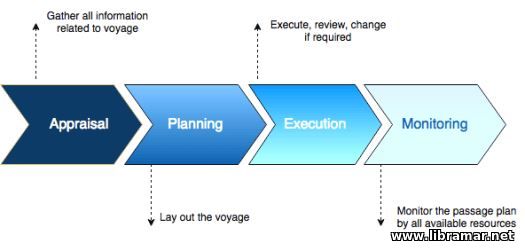
- - Appraisal, i.e. the collection of information and validation of all relevant information;
- - Planning, i.e. the presentation of the raw data -into information and the strategy to be used;
- - The execution of tracking, voyage and communication control;
- - Monitoring, i.e. ensuring that the voyage plan is being followed.
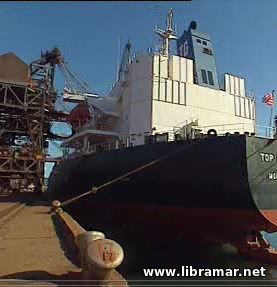
 The ropes need to be checked regularly for tautness. If your ship has self-tensioning winches, these are best left on the brake and not left in tension once the ship is secured alongside. In an emergency, never release the brakes and attempt to pull a ship back alongside using the power of the winches alone. You must know the ship’s mooring equipment and be familiar with its operation and capabilities including the type of winch and brake, the size, type and length of lines.