 This volume written by A. Kostianoy and A. Kosarev has been mainly dedicated to the environment of the Aral Sea. This work is presenting quite detailed description and systemized knowledge that have been accumulated to date and related to the marine chemistry as well as physical oceanography and marine biology of the sea in question, and with particular attention paid by the authors to the monitoring of the state and various parameters of the nature of the Aral Sea together with all its surroundings, by means of the satellite techniques.
It belongs to the popular "environmental chemistry" series. The authors have also tried to highlight the key reasons for the environmental crisis that is currently progressing in the subject area, and all associated socio-economic problems. The material contained in the book bases on the valuable observation data obtained by the authors in the course of several shore and sea expeditions, on the data collected from the archives of state institutes, and from the relevant scientific literature, supplemented with the results of numerous international and Russian national researches and projects conducted during the past decades. This publication will be mainly addressed to the pro's of marine biology and chemistry, plus physical oceanography and other relevant fields.
 The biofouling is considered a very costly problem which is faced in a really wide range of various technical systems, from the maritime industry to power industry, purification of the water, paints, and even microelectronics. The organisms that attach themselves to the outer surfaces and then accumulate on them, form the so-called biolfilms that might potentially result in the interferences, and this is actually a natural process.
Normally, people in the industry apply a medical paradigm when trying to get rid of this problem, and such approach implies killing the biofilms. However, this will inevitably lead to the excessive use of the biocides; in addition, note that the success of such strategy would be quite limited. And, moreover, this could lead to serious damage to the equipment and even the environmental pollution.
That is why simply killing the fooling organisms cannot be considered a good strategy. This volume will present the most successful strategies of prevention of the adhesion, mitigation of the extent and effects caused by the biofouling, detection and removal of the fouling layers. The authors have elaborated the holistic approaches and took into consideration such important aspects as limitation of nutrients, replacement of the biocides with other methods etc.
 The present publication provides lots of useful information about the integration of the newly introduced technologies in the field of the ocean observation. The content bases on the valuable contribution by numerous recognized experts ad covers the chemical, physical and biological processes taking place in the oceans from micro and up to macro scale.
The authors have provided the information that will definitely be useful and interesting to both oceanographers and people engaged in the research activities, in fact to all persons requiring efficient solutions to the existing measurement problems. The observational techniques applied to the oceans have shown rapid development in the last decade and one of the intentions of the authors of this volume was to address the requirements for the single overview of today's and future trends in this field. They have elucidated all scenarios of the observational techniques and tools and covered all three observation modes, i.e. deep ocean, upper ocean and surface.
The information related to the data modeling and quality has also been included. The volume collects a good summary of observational methods together with their practical applications. It will be appreciated by the students and specialists in the field of ocean engineering and oceanography; however, it will also present interest to the engineers in the other fields.
 The nice and interesting publication offered here, was compiled by an excellent team made of truly recognized industry experts working in the field of marine science and has actually been dedicated to the submarine mass movements considered critically important part of the turbidity.
The opening section of the volume explains the basic nature of the submarine mass movements including the triggers and also mechanics, plus major geo-technical properties - among the issues that have been covered within present section there are advanced dynamic testing of the soil, self-organizing maps, submarine slope failure, mass wasting dynamics, micaceous sand, drag forces acting on the suspended pipelines and lines laid on the sea floor, subaqueous deposits, control of the slope destabilization, shear rupture propagation etc.
The second section is mainly focusing on the analysis of the several real-life case studies plus the assessment of hazards involved - it covers such topics as the mass-transport deposit, submarine mass transport, sediment redistribution and mass wasting in particular geographic areas, risk analysis conducted for the submarine mudslides induced by hurricane-wave effect, gas-generated pore pressure, slope instability, morphodynamic instability and numerous specific topics that would otherwise be very difficult to find in any other publication.
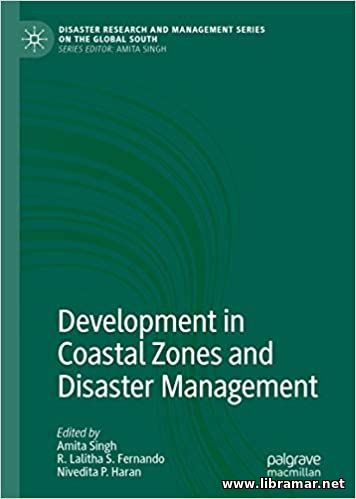 During the past twenty years, the coastal areas endured several geophysical and oceanic disasters. However, people keep failing to establish the connection between the environmental and both human and non-human calamities. Nowadays, the conservation of the coast line is not considered a matter of casual governance anymore but is rather treated as a part of survival measure.
The South Asia region ranking high in the vulnerability due to the lack of the supply of governance, low resilience and other factors shall be paid ultimate attention. The publication is reflecting the author’s holistic approach to the disaster management and is a truly perfect reading for the people engaged in the research and administration activities in the field, and those assigned responsibility for the decision making in connection with the disaster prevention.
Seven parts of the volume provide all necessary information on the regulatory framework, conservation of the marine fauna and flora, preparedness and the EWS, standing for the early warning system, processing the relevant data etc. Numerous case studies provide additional information and are presented in a separate part, with the detailed analysis.
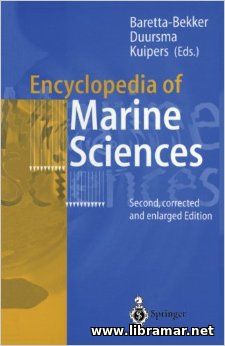 The really multi-disciplinary nature of the marine science has been reflected in this volume. The book contains nearly two thousand of keywords listed in alphabetical orders and supplemented with the colorful and informative illustrations included with the intention to provide the students and teachers, as well as scientists with a time-saving and very helpful aid to be used in the course of studying the specific literature.
It also provides all interested parties with the brief yet comprehensive technical explanations of the basic concepts, fundamental terminology and established methods and this all makes the book even more valuable to the readers than just a pure dictionary. It is relatively small but truly wonderful book and maybe the only one of its size, completely covering such a wide topic area. The content of the book reflects an excellent job done by the team of authors.
Many terms in the book has been cross-referenced and such approach provides even better understanding of the terminology. In short, we guarantee that the present encyclopedia will be very useful to any person with the interest in marine science as they will get a thorough and proper understanding of the most important aspects of marine environment, such as the exploration and exploitation, management and other aspects.
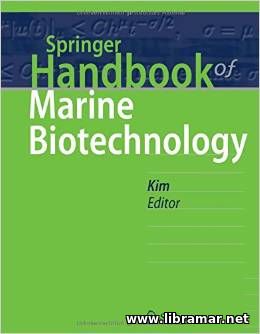 This Handbook provides a remarkably complete and truly consistent technical overview of the methods, products and applications in marine biotechnology. We know that the large portion of the earth surface, more than seventy percent, is covered by water, and more than eighty percent of all organisms living on our planet are found there, in aquatic eco-systems.
We may thus say that the aquatic ecosystems constitute a very rich natural reservoir for the various chemical/biochemical materials and processes. This handbook has been edited by a world recognized expert and was prepared owing to more than sixty invaluable contributions provided by the world leading international scientists - this made the book a major desk reference tool for all people with the interest or working activity in marine biotechnology, bioprocessing or any other relevant fields, including professionals, scientists and students of all levels.
Se-Kwon Kim, the editor of the handbook, has divided the content into ten chapters, each of them is organized very consistently and, as a result, the publication can provide a sound intro to the marine biotechnology, starting from the historical overview and basics, over the technical descriptions of the established methods and technologies, and to the applications of these methods and technologies. Note that it is also perfect when used as a reference book. The key topics of the handbook include marine flora/fauna, genomics and microbiology, tools and methods, biofuels and bioenergy, bioproducts and so many more...
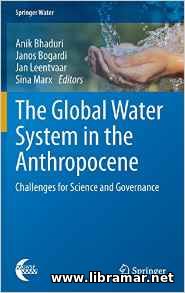 We know that humans have influenced the environment in many ways in the past, but since the industrial revolution and even more during the "great acceleration in the human enterprise" following World War IT, humans have assumed the role of a dominating force in changing the biosphere, geosphere, atmosphere, hydro- and cryosphere and hence affecting crucial functioning of the whole Earth system...
This publication prepared by a team of experts in marine science was released to provide the industry and all interested people with a platform allowing for the presentation of both regional and global perspectives of the experiences on responses to global changes to address the key issues, for example the increasing need for water, supply variability, environmental flows and other related aspects.
The content of the book will help readers to build the required links between policy/science and practice in the field of management and governance of the water resources. The book also addresses the latest technological and institutional innovations and also identifies the keys in which the research activities could assist the practice and policy related to the sustainable freshwater management. The proper management of the fresh water is considered one of the most important challenges to reach the sustainability within the global environment.
|