 This is maybe one of the best sources of technical information for all people who are interested in the design theory and methodology of the performance rating for all types of heat exchangers. It shall be treated as the advanced volume definitely appropriate for the practicing engineers in various thermal sciences and also to the students of the relevant disciplines.
However, some introductory course on the basics of the heat transfer process might be required fro those readers who possess little technical background in this area, to appreciate the whole wealth of information contained in the book. This textbook presents the detailed coverage of some technical subjects that are only mentioned in most of the other books dedicated to the design of the heat exchangers - this would include the temperature effectiveness method, misdistribution of the flow, longitudinal conduction effects and others.
The comprehensive correlations have been explained and well documented. The text part of most of the chapters is supplemented with some examples, graphs, tabular data and other reference information for easier and better understanding of the theory. The bottom-line is that the present publication is a truly excellent book on the thermo-hydraulic design of the heat exchangers and their performance rating.
 The present training manual has been specifically prepared and officially released by FRAMO professionals to be used by all people who are going to take the associated training courses. Subject courses are run by the company on the regular basis and FRAMO members are doing their best to transmit their technical knowledge to anyone interested.
The effectiveness of all professional training courses that is offered by FRAMO company has already been proven everywhere. The present publication contains all information required to be possessed by all interested people who are willing to enroll in the above stated training courses. The users will find everything that they need there, including the location of the courses and training seminars.
The training that is deal with in the present booklet will enable the learners to conduct the operations at the time of the cargo discharging and stripping, heating of the cargo and tank washing in a correct way, to perform proper periodic maintenance/troubleshooting of the main components of the system. It starts with the part describing the submerged cargo pumps produced by FRAMO, and basic hydraulic systems together with their associated components plus providing some info on the tanker design using the Frank Mohn system of cargo pumping...
 The book is designed to provide necessary instructions on the recommended practices outlines in the latest release of ASME Code and relating to the inspection of the pressure vessels and piping arrangements, their evaluation and monitoring. The publication will annotate and explain the content of the Code and inspection/fitness-for-service practices of API.
The information in the book has been presented in a very clear and precise manner making in readable even for the non-professionals in the industry; this publication shall definitely be considered a truly comprehensive guidance explaining how exactly the stress analysis, construction materials, established engineering practices and NDT inspection could affect the fitness of the pressure vessels and piping for their intended service.
In fact, it is a thorough exploration of the failures occurring to the tanks, piping and vessels done through the perspective of an engineer, meaning that it will need to be usable and user-friendly enough to come to the correct run-or-repair decision. It will provide readers with the due understanding of why the above mentioned equipment may fail, when and how it can happen and what shall be done to avoid this. An excellent reference source for marine and mechanical engineers.
 NFPA 25 was first released in 1992 with the declared purpose being the promote the activities and certain sections were specifically pertaining to fire pumps. NFPA fully recognizes that the installation standards such as NFPA 20 or maintenance document such as NFPA 25 must be suitable for enforcement and, as a result, must be concise and without explanatory text. Additionally, it must be acknowledged that such standards cannot be written to cover every situation that could be encountered.
Therefore, NFPA 20 and NFPA 25 must be applied with judgment, the application of good sense, and an awareness of the rationale for the requirements. To assist in this task, NFPA, in partnership with the NFSA, has developed the Fire Pump Handbook. The present publication is intended to provide users of NFPA 20 and applicable portions of NFPA 25 with background information on certain requirements.
The book also contains some suggestions on how certain provisions of the standards can be implemented effectively. The contents of the handbook are intended to provide users of NFPA 20 and NFPA 25 with a better understanding and appreciation of the documents. However, the reader is cautioned to look upon the commentary and other supporting information as views of the editors and contributing authors. Only the contents of NFPA 20 and NFPA 25 are considered the official position of NFPA.
 This would be an excellent choice for the people needing a publication that would be focusing on various aspects of troubleshooting and repair of the diesel engines. The book is considerably thorough and full of informative illustrations. This textbook will provide readers with the technical details that they need beyond the general idea of how such engines function.
It really contains plenty of useful info and would definitely help all industry participants, and particularly diesel technicians with a great deal at work in their professional careers, giving much more than would be enough. The author, Paul Dempsey, has presented all recent technological advances in diesel engines. This revised and updated classic guidance is very practical, comprehensive and easy to use, equipping readers with excellent tools as well as proven techniques that are required in order to keep their diesel machinery in satisfactory working condition.
Moreover, the publication also includes so much information relating to the diesel engine diagnostics, fuel oil systems, generators and starters, mechanics of the diesel engine, some basic knowledge of the electrics, engine cooling and lubrication systems, turbochargers, governors, valves, exhaust after-treatment and other critically important aspects. The book is packed with more than three hundred schemes, drawings and images.
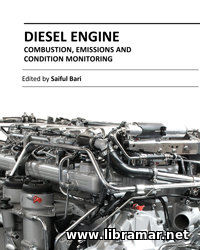 Diesel engines, also referred to as combustion ignition engines, are possessing a truly wide field of possible practical applications as energy converters, and that is owing to their high efficiency, The present textbook is intended to present a contemporary approach used when studying the different technical aspects of this type of engines.
The book consists of ten major chapters and the papers presented there have been selected and carefully reviewed by the recognized industry professionals and all suggestions of the reviewers have also been taken into consideration when releasing this volume. For convenience of the readers, this publication has been arranged in three sections.
The first section provides the theoretical basics of the combustion and emissions. The second section concentrates on the after-treatment of the exhaust gases and EGR. Finally, the closing section of the volume has been dedicated to the various systems of engine control and monitoring.
This is really recommendable reading for both industry professionals and students, who will definitely find there the answers to the most common theoretical questions that may arise when studying the construction and operating principles of the diesel engines. The book discusses the most important tools of detecting the common failure modes that could detect the early signs of the diesel engine failure...
 This book has been prepared by Brian Nesbitt, the recognized expert in the field and a very experienced engineer. As a result of his efforts, the publication contains valuable technical information on nearly all aspects of pump technology, including the pump classification principles, materials that the pumps are usually made of, seals, installation of the pumps, their commissioning after installation and their periodic maintenance. In addition to the information covering the areas listed above, the readers will find some essential info related to the nits, makers and suppliers all over the world - it means that you will have a unique reference source for your desk, shop or library.
The descriptions of the maintenance techniques included in the book will help the readers in getting optimal performance of the pumps and in reducing the associated running and maintenance costs, and also in understanding the principle of work of the seals and couplings, as well as all other ancillary equipment in order to ensure that the systems are correctly set-up; the book also provides some useful contact details for the makers and suppliers specializing in pumping arrangements and ancillary equipment. This is a really useful publication for the personnel dealing with installation, operation, maintenance and repair of the pumps.
 The original intention of the author of this publication was to provide readers with basic technical knowledge allowing them to understand the construction and working principles of the compressors, namely of the dynamic and positive displacement types.
He managed to address all technical aspects of their operation and performance. People who spend some of their time going through the pages of this book, will for sure learn nearly everything they may need to know and will be able to select and operate these compressors safely and effectively - they will also have the idea of correct troubleshooting in case of necessity. The readers will know how to communicate with the peers, manufacturers, and sales personnel. Several selected real life case studies have been included by the author to supplement the theory. This publication demonstrates the investigative methods that are used to identify and subsequently isolate various causes, e.g. operating errors, design deficiencies, changes of the machinery process, environmental conditions, manufacturing defects etc.
Improving such skills will definitely help workers to return to their workplaces and do their job even more effectively. Compressors form very important part of the machinery on board; that is why their installation and operation, maintenance, troubleshooting and repair should be performed at the highest level possible, to avoid any sort of technical problems that may be encountered.
« 1 2 ... 17 18 19 20 21 » |