
IMU-CET - Question Bank with Test Guide
16.07.2017  Looking into this volume, we have underline the main purpose of this well-written plus remarkably comprehensive publication is to describe physics of the seabed liquefaction processes taking place around marine structures, together with their implications for the pipelines and sea outfalls, plus quay walls, caisson breakwaters and different other marine structures. We would recommend this title to literally all participants of the ocean as well as marine and coastal engineering industry and anyone with the practical interest in the liquefaction/stability of marine structures. Professor Mutlu Sumer, the author of the this title, has also included numerous real-life examples with the sole intention to duly illustrate the possible catastrophic consequences of the liquefaction of soil as applied to the various marine structures; moreover, the author has also addressed the matters of math modeling of the liquefaction. Some other live examples are directly supporting the discussion on the proper assessment of potential the liquefaction has, as well as the investigation of the benchmark cases. A must-have reading to any specialist in different areas of ocean engineering and any associated disciplines, including students, pros, scientists/researchers taking part in the activities of marine and ocean engineering. 15.07.2017  One of the principal goals declared by the author of this volume was to establish the connection between the mechanical hardness numbers and the physics of the chemical bonds in quantitative and simple ways. In the past, this has not been achieved in the effective manner as the commonly involved atomic processes have not been properly an fully identified. Though it is still true for the cases of the complex atomic structures, the author of the title believes that the relatively simple prototype cases are duly understood today. It should be taken into consideration, however, that the associated mechanisms change with the types of the chemical bonding. And no universal chemical mechanism exists there to determine the mechanical hardness. The author has made an attempt to develop the proper understanding of the plastic deformation and hardness; this is definitely not a straightforward task as the literature sources covering this subject is still partly confused. The chapters of the volume cover the indentation and plastic deformation, covalent semiconductors and chemical bonding, transition metals, ionic and molecular crystals, glasses and polymers, chemical and hot hardness, simple alloys and metals, inter-metallic compounds, hard metals and "superhard" materials, actually everything one will require to be aware of... 15.07.2017  We know that nowadays there are so many really excellent books available on theory of structures; however this classic textbook definitely deserves close attention of the professionals and students of mechanical engineering. One of declared purposes of the publication was to provide students and pros with a very easily digested form of training course covering a very wide area of theory of mechanical structures in order to stimulate their interest. Considerable portion of this book was dedicated to the basic theoretical concepts of the behaviour of structures. There are some good control questions at the end of each chapter; they shall be used to track the progress and understanding of the material. We would strongly recommend to make as many attempts in solving them as possible. The correct answers to all numerical questions have been provided. The authors divided their work into twelve chapters, starting with the one addressing the equilibrium of structures; the following chapters deal with the shearing force/bending moment, complex stress and rolling loads, statically determinate plane trusses, deflection of beams, combined bending, direct stresses, buckling of struts, defection of trusses - both graphical and strain energy methods; in addition, separate chapter is there dedicated to the reinforced concrete. 14.07.2017 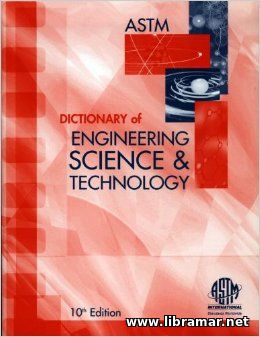 All technical definitions that have been included into the present ASTM compilation of the terms are standard definitions that have been published in the terminology standards. This is the latest tenth edition of the dictionary prepared by ASTM International and sponsored by ASTM Committee no. E02 on Terminology. The book would allow all readers to reference technical terminology developed by different ASTM Committees. It is also intended to facilitate the comparison of technical definitions that have been created by technical subject experts in many different disciplines. There are all almost thirty thousand standard technical definitions contained in the present edition, i.e. over seven thousand new terms when compared to the previous edition. You will easily get the proper explanation of the technical terminology not commonly found in most technical dictionaries. It makes better and much faster use of the standards developed and released by ASTM, and let the reader know how the given technical fields use the terms. Each of the definitions contained in this dictionary was written with the professionals active in their field and reflects the sense in which it is used; it also provides the proper designation of the standard in which the term is being referenced and Committee that worked on the standard and developed it. 14.07.2017 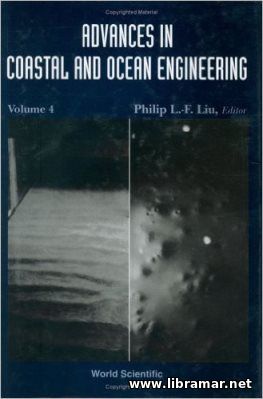 Most of the planet's surface is covered by the ocean waters. Many of the important aspects of our day-to-day activities may easily be affected by the waves in one of another way. And sometimes the waves can result in disasters, such as the tsunami occurred in the Indian Ocean some years ago. This demonstrate how critical it is for the people to thoroughly understand the ocean waves paying particular attention to the large waves. One of the ways to get to this understanding is to conduct the numerical simulation on the basis of the non-linear theory. There have been several serious researches in this field in the past decades by the development of the different numerical methods and their application to the emerging problems; however, there has been no comprehensive volume that would reflect those advances. This book should bridge the subject gap. It consists of the eighteen self-contained chapters worked out by more than fifty professional authors from twelve different countries, with most of the authors being the world recognized experts in the field. The content of each chapter is mainly based on the researches conducted by the authors. Altogether the chapters of the book are dealing with the literally all numerical methods currently employed to the simulation of the non-linear water waves, covering most of the interesting and important applications. |
The "Read Later" function allows you to add material to this block with just one click. Just click on the icon and read the articles that interest you at any convenient time.