Bridge Resource Management Matters
When we lose situational awareness, we increase the potential for human error. Warnings that situational awareness has been degraded include ambiguity, distraction or preoccupation, general feeling of uncertainty, break in communication, departure from voyage plan, violation of rules, regulations, or standard operating procedures, improper con or lookout, and complacency or overconfidence. The complexity of operating a modern day vessel and the interactions within and outside the bridge team provide the opportunity for errors.
There are three types of human errors. Failure to adequately plan for events, failure to know and follow established procedures, and failure of the members of a group working toward a common goal to adequately communicate with one another. Accidents are rarely caused by a single event.
It is usually a sequence or chain of events that cause an accident. Breaking an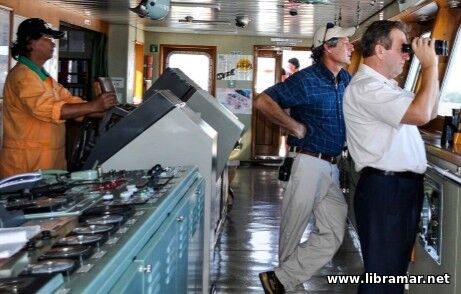 error chain or error trapping is essential to preventing accidents. All bridge team members must be able to identify error chains and be empowered to take corrective action and ABs should be encouraged to speak out.
Communication is the exchange of information, thoughts, or feeling. To be effective communicators, the need to understand the various types of communication is imperative. The most effective type of communication is face to face.
This enables you to receive visual as well as spoken information. Verbal communications include all types of radio and telephone communications. It is important to choose your words carefully and speak them loudly, clearly, and concisely due to the lack of visual stimuli.
The least effective communication is written. An effective communication process includes the sender, the message, the receiver, and the feedback. The sender should be conveying information necessary for the mission accomplishment.
He or she must be proactive in making the receiver understand the message. The message should consist of correct terminology and be clearly sent to the receiver. The receiver should be active in the communication process and give message feedback.
Feedback can include acknowledgement, repeating, or paraphrasing. Once the receiver has given feedback, the communication process is completed when the sender acknowledges it. In understanding the relationship between stress and performance, it is important to first consider the effects of stress on the body.
There are three stages associated with stress. The state of alarm, resistance, and exhaustion. The initial state of alarm takes the body by surprise, and the ability to cope with the stress is reduced.
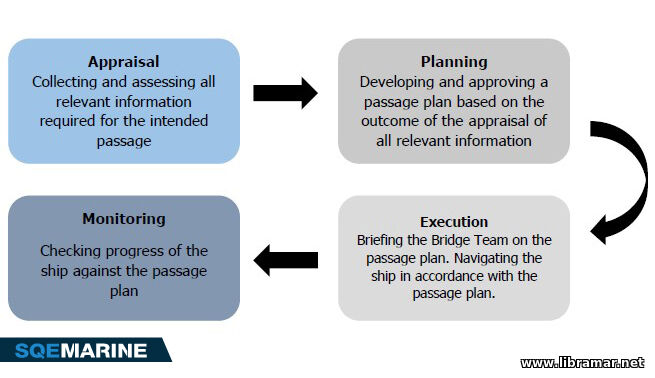 As the body fights or resists the original source, the symptoms gradually disappear. The body adapts to the higher level of stress, but the ability to cope with other stress begins to fade. Eventually, we are unable to cope with the original stress, and exhaustion sets in.
Exhaustion occurs when the body's resources have been depleted. Not all stress is bad. Studies show that the body performs best when under moderate stress.
Too little stress causes boredom or complacency, while too much diminishes situational awareness and causes panic. Good bridge team leaders will not only deal with stress within themselves, but will perceive and accommodate stress in other team members. This includes reducing an individual's workload or assigning tasks based on ability and experience.
Fatigue is defined as weariness or exhaustion from work, overexertion, inadequate sound sleep, or the cumulative effects of poor sleep over several days. Fatigue slows visual perception, decision making, mental arithmetic, and impairs memory recall. Signs of fatigue are errors of omission, slower task performance, decreased morale and motivation, poor communications, and sleeping on duty.
Two strategies for fatigue countermeasures are the preventive and the operational strategies. Preventive strategies are used before and between duty periods. This includes getting the best possible sleep before reporting on board.
You should begin operations as sleep-satiated as possible, getting eight hours of sleep in any 24-hour period. Trust your own physiology. If you feel sleepy and circumstances permit, then sleep.
A basic rule is if you wake spontaneously and cannot go back to sleep within 15 to 30 minutes, you then get up. Strategic napping and good sleep habits are also part of the preventive strategy. Studies show that effective naps can improve performance.
Naps before any duty period should be limited to 45 minutes. Naps at other times should be more than two hours. Good sleep habits include a pre-sleep routine, possibly utilizing relaxation techniques.
A dark, quiet room with a comfortable temperature is also important. Regular exercise will improve your quality of sleep. Because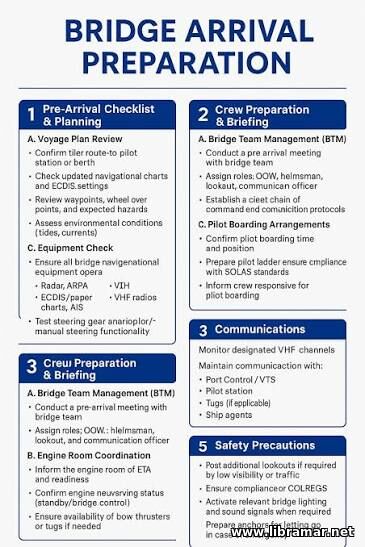 the ship schedule does not always allow these preventive strategies to be followed, it is important to discuss operational strategies.
The following can be used to increase alertness while on duty. Physical action, conversations on professional topics, strategic caffeine consumption, balanced nutrition, and staying well hydrated. The promotion of bridge resource management is based on the concept of synergy.
Synergy is described as the total of the individuals in cooperation is greater than the sum of the individuals taken by themselves. The best leaders share their information, communicate openly, and encourage participation. The respect of others and the ability to share workload are also traits of a good leader.
Maintaining a constructive and positive attitude and keeping a receptive atmosphere coupled with honesty are necessities of productive leaders. Decision-making is an essential skill for operational team leaders. Team members participate in the problem-solving process by contributing timely and valuable information to the team leader.
In order to make a positive decision, information must be gathered and cross-checked. Alternatives and contingencies must be identified so that possible solutions may be explored. And, if the aforementioned processes are implemented, the goal to safer and more efficient vessel operations through bridge resource management will be well underway.


The "Read Later" function allows you to add material to this block with just one click. Just click on the icon and read the articles that interest you at any convenient time.