Automatic Identification System
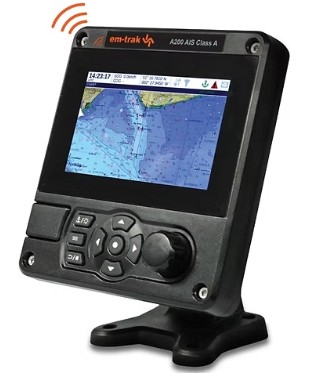
AIS, standing for the Automatic Identification System, in its latest enhanced version allows identification and tracking from other ships and also from shore stations. A broadcast AIS improves safety and solves the limitations of radar because of its ability to see a ship behind a bend in a channel or behind an island and to identify it.
It also helps the commander to predict the exact position of a meeting with other ships in a river or archipelago and to avoid meeting at a narrow river bend for instance. Autonomous and continuous AIS means that two or more vessels coming within reach of VHF radio range automatically transmit all the AIS data to each other. The equipment is the same for both ships and shore stations and the system can handle several thousand AIS messages per minute.
The AIS transponder consists of a GPS receiver giving position, speed and time information to a computer. The computer then uses a VHF radio to exchange the information data with other AIS stations. This technique is called self-organized time division multiple access and needs only one radio channel for sending and receiving.
A unique method is used so that the messages won't become garbled. An AIS transmitter uses a time slot of only a few hundredths of a second to send its own data. At the same time, it reserves another time slot for the next message.
All AIS equipped ships and shore stations repeat the same procedure. AIS technology which was partly developed and tested in Sweden is now an approved international standard. The Swedish coast will be covered by more than thirty shore stations.
The information provided by the AIS will include call sign and name, length and beam, type of ship, location of position fixing antenna on the ship, ship's position with accuracy indication, time and universal time coordinated UTC, course over ground, speed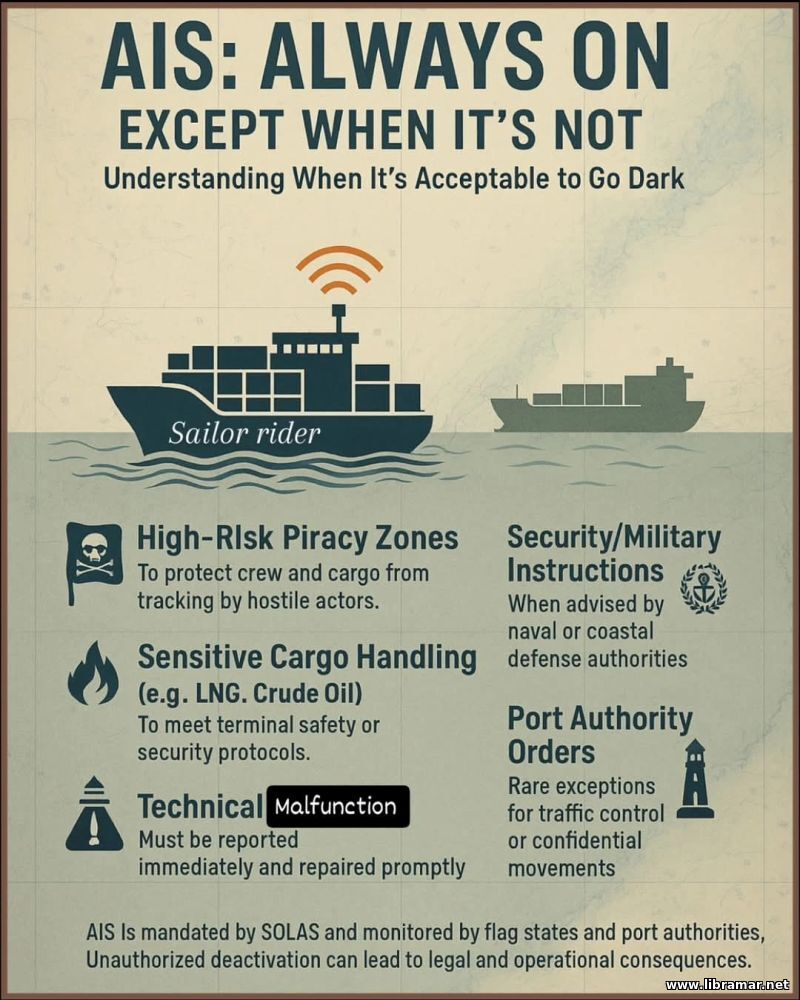 over ground, heading, navigational status for instance at anchor, ship's draft and hazardous cargo if required by the authority concerned, and destination and estimated time of arrival.
AIS using broadcast techniques and with a high update rate will increase the possibility of detecting the whereabouts of other ships even if they are behind a bend in a canal or river or behind an island. AIS will also solve an inherent problem of all radar by detecting fishing boats and smaller ships fitted with AIS in heavy seas, sea clutter or heavy rain.
Innovative technologies like electronic charts and AIS have a great potential for improving maritime safety in the future. They also make it possible to identify, track and supervise ships from the shore with much higher and more sustainable accuracy than shore-based radar. The officers of the watch are those who benefit most from an AIS system because it represents a significant improvement in the safety of shipping and navigation.
Apart from the information on the AIS systems presented above, please note at all times that the subject system now forms an integral part of the safety navigation equipment that shall be installed and be functional onboard all passenger ships of all sizes, as well as the cargo ships of 300 GT and 500 GT and above engaged and not engages in the international voyages, respectively.
The system shall be subjected to the annual testing by the radio specialist company recognized by the Flag Administration of the ship, who normally check the programming and sensor connections within the system arrangement, as well as the radio performance, and report on this, accordingly. Failure to maintain the AIS in working order and full functionality will lead to the Port State Control finding and possibly detention.


The "Read Later" function allows you to add material to this block with just one click. Just click on the icon and read the articles that interest you at any convenient time.